
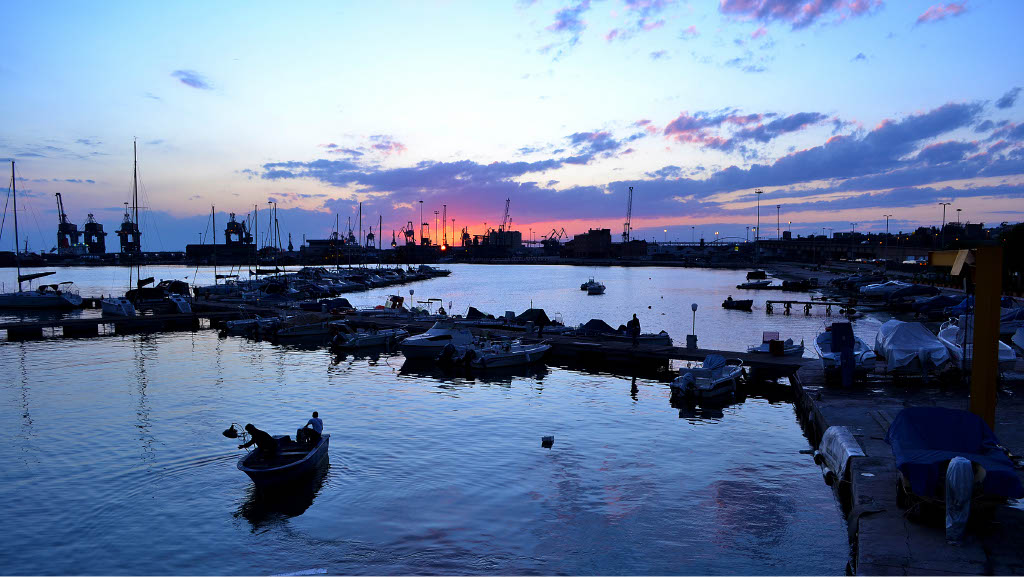
Taranto is an ancient city on the South coast of Italy sitting just at the top of Italy’s boot heel. It overlooks the Ionian Sea and like many Southern Italian cities has a rich maritime culture and roots in Greek mythology which connect it to the sea.
Taranto in the region of Puglia is known for its spectacular beaches, seafood, and unfortunately, Ilva. Ilva is a steelworks factory built in Taranto in the 1960s, which is now one of the most catastrophic environmental disasters in Europe.
How it started
The factory is owned by Acciaierie d’Italia (ADI), but it’s still referred to by its original name, Ilva, which is the former state enterprise that built it. At its peak in the 70s Ilva produced more than 17 million tonnes of steel every year and employed 40, 000 people – about 16% of Taranto’s population!
The positive effects on unemployment in the region were short-lived, and completely outweighed, as pollution took over and the demand for steel diminished. The factory’s distinct striped chimneys emit a fine red dust which is a mix of minerals, metals and dioxins (a dangerous industrial carcinogen). Data from 2005 showed that Ilva was responsible for more than 90% of Italian, and 8.8% of all European dioxin emissions. The chemicals turn the skies pink and are deposited into land and water, saturating the soil and marine and aquatic environments.
Living with pollution everywhere
The pollution is so intense that grazing is forbidden within a 20 km radius of the plant. This has further displaced farmers, who had to already make way when acres of land and olive trees were cleared when the sprawling steelworks was built – covering an area almost three times the size of the city of Taranto itself. Over the years, almost 3,000 livestock have been killed after excessive dioxin levels were found in the soil and in products like cheese.
Carcinogenic dioxins have been found everywhere, from drinking water to breastmilk. The dioxins are associated with several different types of cancer, and in Taranto the incidence of certain types are up to 70% higher than the national average. This is the case especially with children, and the rate of lymphoma in children was double in Taranto from 2012-2019 compared to the rest of the country.
Tamburi is the worst affected neighbourhood, lying downwind of Ilva’s toxic fumes and separated from it by a mere wire fence. Residents report finding red dust on their streets, balconies, and even in homes if windows are left open. In Tamburi, touching the soil is forbidden and people stay indoors on windy days to avoid the toxic dust. Schools have even been mandated to close on particularly bad days.
The Mar Piccolo
Taranto houses a shallow coastal basin divided into two inlets, known together as the Mar Piccolo – ‘small sea’. The Mar Piccolo is fed by freshwater springs creating the brackish (slightly salty) water which mussels thrive in. These conditions provided the foundation for mussel farming which has strong cultural and economic significance in the city. The locally produced mussels – Cozze Tarantine – are nationally renowned for their taste and freshness. Thanks to Ilva, the Mar Piccolo is now feeding mussels with dioxins and polychlorinated biphenyls (PCBs).
In 2011, dangerous levels of dioxins and PCBs were found in Mar Piccolo mussels, exceeding the limits allowed by European legislation, and cultivation in the first inlet of the Mar Piccolo was prohibited completely after levels were found to have increased even further in 2018. Today, mussels are being moved to finish maturing in the Mar Grande away from the pollution.
The bans and restrictions have had significant effects on livelihoods, causing overcrowding and diminished quality. There are even reports of producers illegally farming unsafe mussels in the more polluted areas to get by.

Where is Ilva now?
Today only 8,500 people work at Ilva. Locals describe feeling as though they have to choose between their jobs and their health. Many employees now travel to work from outside Taranto, creating a tension amongst the local people who constantly bear the brunt of pollution. Many stay because they can’t afford to leave; an issue made worse since the pollution has caused house prices to plummet.
Ilva has been at the heart of an ongoing struggle from the European Union, Italian courts of law and growing movement of resistance from residents of Taranto and environmentalists who are pushing for it to be shut down, against the Italian government who are fighting to keep it open for the economy.
What does this have to do with the South, and justice?
Ilva is an example of a Cathedral in the Desert: a term coined specifically for large industrial factories which were dropped in the South of Italy as part of the post-war economic boom. They were intended as development projects, to bring employment to typically agriculture-based economies. Although initially welcome they end up providing no long-term benefit, distorting the vocation of regions best suited to build their economies on natural resources.
Poverty in Puglia is 22.8% compared with the national average of 14%. Unemployment rate averages 4.8% in Northern regions and 12% in Southern ones. Because of this, more often than not, deprived communities exposed to industrial pollution are more likely found in the South. Other examples include Crotone in Calabria plagued by toxic waste, and Priolo, Gela and Milazzo all in Sicily which are exposed to petrochemical pollution causing health implications such as birth defects.
Social inequalities fuel environmental injustice, and we see this all over the world. The injustice in the case of Ilva lies in the government’s determination to keep it running, despite mounting evidence that it’s endangering public health and the environment. “Cathedrals” like Ilva end up keeping the South in a more deprived state, and now the government can’t bear to shut them down.
Be Curious!
- This happens closer to home, too. A recent analysis from the BBC shows that waste incinerators are ten times more likely to be built near deprived areas. Just this week the case of the Runcorn incinerator in Chesire was in the news.
- National Geographic report how, despite the pollution, Italy’s resident dolphin population appears to be thriving.
- Jonian Dolphin Conservation is a local marine conservation NGO that studies the cetaceans of the Gulf of Taranto. They wrote a paper exploring how investing in research, education and tourism can help move Taranto away from negative associations with industrial pollution and promote a sustainable blue economy.
Featured Image credit: Luca_Cava via Getty Images


